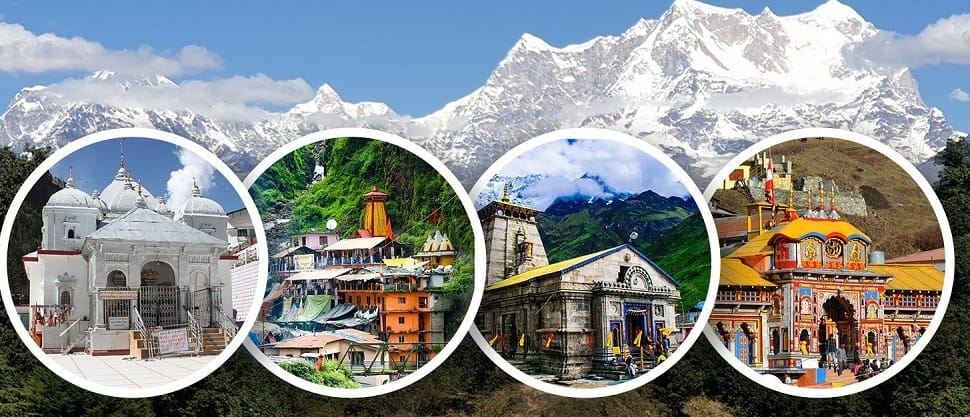
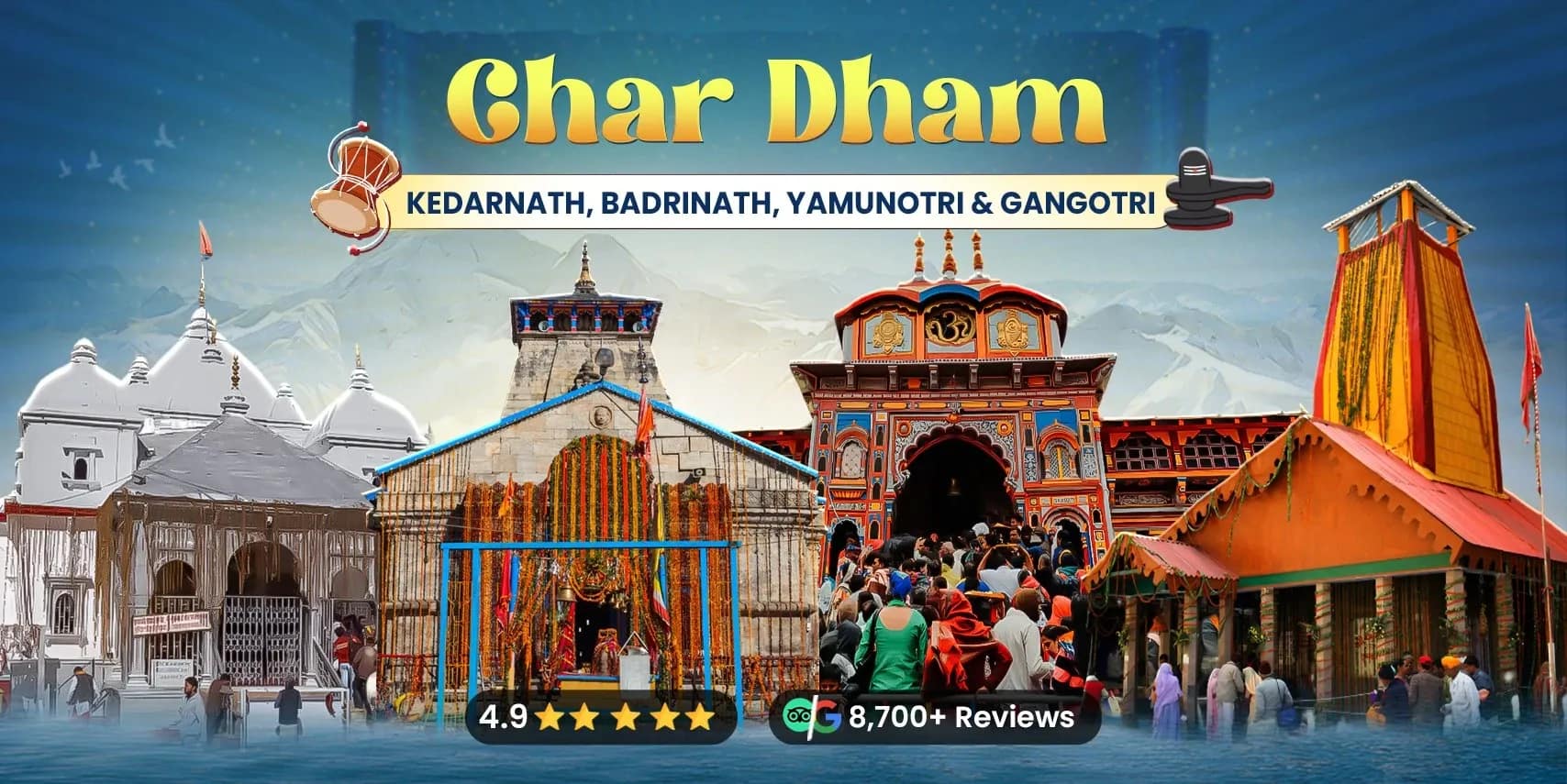
The Char Dham Yatra of Uttarakhand is one of India’s most spiritually significant pilgrimages.
Encompassing four sacred river sources and Himalayan shrines—Yamunotri, Gangotri,
Kedarnath, and Badrinath—this circuit attracts millions of devotees seeking spiritual liberation
(Moksha). Nestled deep within the Garhwal Himalayas, the yatra is physically demanding and
operationally complex. Weather patterns shift dramatically, and rigorous state regulations
govern the flow of pilgrims.
As your trusted travel partner, Wonder Bharat Holidays has crafted this definitive, SEO-
optimized guide for the Chardham Yatra 2026 season. Below, you will find exhaustive
information regarding exact temple opening timelines, step-by-step biometric registration
pathways, precise packing strategies, route tracking, and vital safety considerations to ensure a
smooth, sacred journey.
- Chardham Yatra 2026 Temple Opening Timings & Scheduling
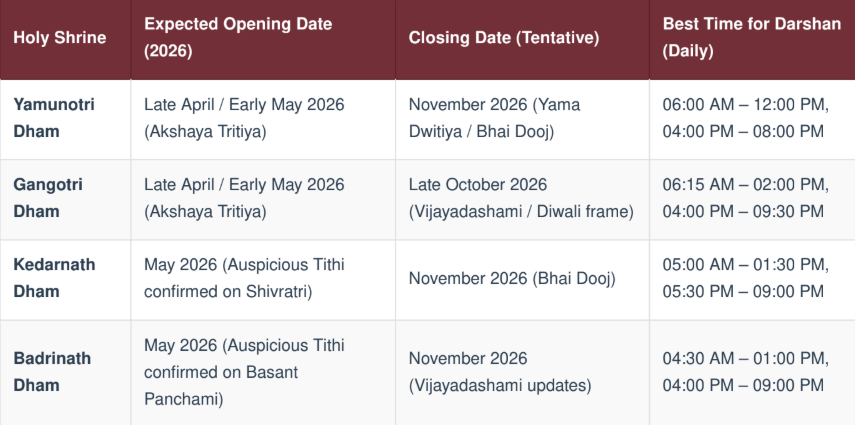
The opening dates of the holy portals (Kapaats) are traditionally calculated on auspicious Hindu
festival frames. While Gangotri and Yamunotri consistently open on the festive day of Akshaya
Tritiya, the dates for Kedarnath and Badrinath are finalized on Maha Shivratri and Basant
Panchami respectively by the temple committees.
For the 2026 calendar year, the tentative and announced dates dictate that the circuit will fully
open to the public in late April / early May and run through late October or early November until
Bhai Dooj and Vijayadashami.

Compulsory Yatra Registration for 2026: Step-by-Step
The Government of Uttarakhand mandates biometric and photographic registration for every pilgrim entering the state for the Chardham loop. Without a valid registration slip or QR code, you will be turned back at structural checkpoints located in Haridwar, Rishikesh, and Barkot.
Available Registration Modalities:
- Option A: Official Web Portal (Recommended) Log directly onto the Uttarakhand Tourism Care portal:
registrationandtouristcare.uk.gov.in. Register an account using a valid mobile number, fill in individual co-traveler metrics, select travel dates, and generate individual PDF Yatra passes. - Option B: WhatsApp Bot System Initiate the automated registration protocol by sending the keyword “YATRA” via WhatsApp to the official government hospitality number: +91-8394833833. Follow the text prompts to submit documents.
- Option C: Mobile Application Download the Tourist Care Uttarakhand smartphone application from the Google Play Store or iOS App Store to manage real-time registrations and access instant disaster-management warnings.
Mandatory Documentation Check:
- Government-issued Identification Document (Aadhar Card, Voter ID Card, Passport, or Driving License).
- Active Indian Mobile Number for verification codes and SMS emergency dispatch notifications.
- Passport-size digital photographs under 2MB for upload optimization.
3. The Professional Chardham Checklist: What to Carry
The high-altitude topography of the Himalayas features volatile conditions. While temperatures at base locations can reach 30°C in the afternoon, alpine locations like Kedarnath (standing high at 3,583 meters) routinely drop below freezing overnight.
Clothing & Footwear Metrics:
- Premium Thermal Innerwear: Pack at least 3 pairs of premium high-grade thermals.
- High-Altitude Footwear: Durable trekking shoes with deep lug patterns for grip on slippery terrain. Break them in at least 3 weeks before the yatra to avoid debilitating blisters.
- Protective Apparel: 1 heavy down feather jacket, wool beanies (monkey caps) to block cold wind from ears, moisture-wicking socks, and waterproof gloves.
- Rain Protection: Heavy-duty, full-body rain ponchos. Umbrella utilization is highly discouraged on narrow, crowded mountain trails during high winds.
Medical Kits & High-Altitude Pharmacy:
- AMS Protection: Acetazolamide (Diamox) under proper medical advice to counteract Acute Mountain Sickness.
- General Medications: Standardized multi-spectrum painkillers, anti-emetics (Ondansetron for mountain sickness-induced nausea), rehydration salts (ORS), and muscle relaxant creams.
- Personal Portable Oxymeter: Essential for checking blood oxygen levels daily before ascending steep gradients.
4. Crucial Restrictions: What NOT to Carry / What NOT to Do
⚠️ Strict Safety Compliance & Regulations Notice: Failure to adhere to regional restrictions can result in fines, confiscation of gear, or cancellation of travel clearances by law enforcement officers.
- No Single-Use Plastics: Uttarakhand strictly enforces plastic bans near river sources. Carry reusable, high-grade thermal flasks for drinking water.
- Do Not Carry Excessive Heavy Hard-Case Luggage: Most treks utilize porters, mules, or small vehicle trunks. Restrict luggage to lightweight, flexible duffel bags or 50L internal-frame backpacks.
- No Photography Inside Inner Shrines: Digital photography, video recording, or streaming inside the inner sanctum (Garbhagriha) of all four shrines is legally prohibited. Respect the sanctity of the deities.
- Avoid High-Altitude Overexertion: Do not rush your walking pace during the 16 km Kedarnath trek or the 6 km Yamunotri climb. High ascent speeds invite hyperventilation and cardiac complications. Keep a slow, synchronized breathing rhythm.
5. Optimal Route Planning & Sequencing
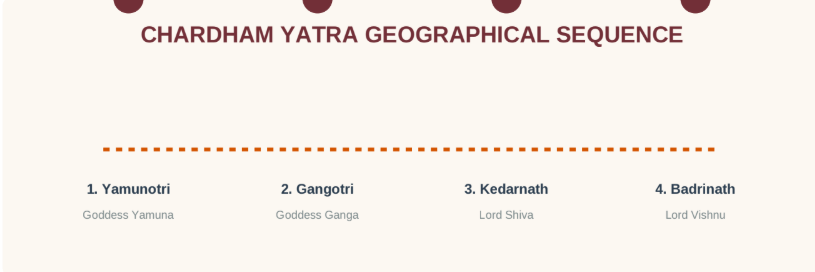
To avoid severe altitude sickness and logistically align with geographic access parameters, traditional guidelines dictate completing the loop in a specific clockwise rotation: Yamunotri → Gangotri → Kedarnath → Badrinath.
Standard 10-Night / 11-Day Ideal Itinerary Skeleton:
- Day 01: Arrival in Delhi / Dehradun. Surface transfer directly to Haridwar or Rishikesh for evening Ganga Aarti.
- Day 02: Road journey from Haridwar via Barkot to Janki Chatti base setup.
- Day 03: Early morning trek to Yamunotri Dham (6 km). Darshan, holy dip, and return to Barkot.
- Day 04: Scenic road transition from Barkot to Uttarkashi. Visit Vishwanath Temple.
- Day 05: Drive to Gangotri Dham via Harsil Valley. Complete offerings, return to Uttarkashi for night halt.
- Day 06: Long distance cross-mountain journey from Uttarkashi to Guptkashi or Phata base.
- Day 07: Base to Gaurikund. Begin the 16 km trek to Kedarnath Dham (or opt for helicopter flights from Phata/Sirsi). Evening Aarti at Kedarnath peak. Night stay at GMVN camps or local guest houses.
- Day 08: Morning Darshan. Complete the downward trek back to Gaurikund, then transfer to Guptkashi for recovery.
- Day 09: Drive through Chopta mountain meadows to Badrinath Dham . Evening dip in Tapt Kund hot springs.
- Day 10: Morning Badrinath Darshan, exploration of Mana Village (the last Indian village), and return drive to Rudraprayag or Srinagar.
- Day 11: Return drive to Rishikesh/Haridwar for onward connection back to Delhi.
Book Your Spiritual Journey Safely with Wonder Bharat Holidays
Executing a safe Himalayan pilgrimage requires meticulous synchronization across verified transport, hotel bookings, government permissions, and helicopter ticketing systems. Avoid the stress of logistical bottlenecks by booking with experts.
Wonder Bharat Holidays offers fully customized Chardham Yatra 2026 packages including VIP Darshan clearances, premium 4×4 SUVs, experienced mountain drivers, and certified hygienic accommodations. Contact our Sales Team today to customize your custom itinerary.