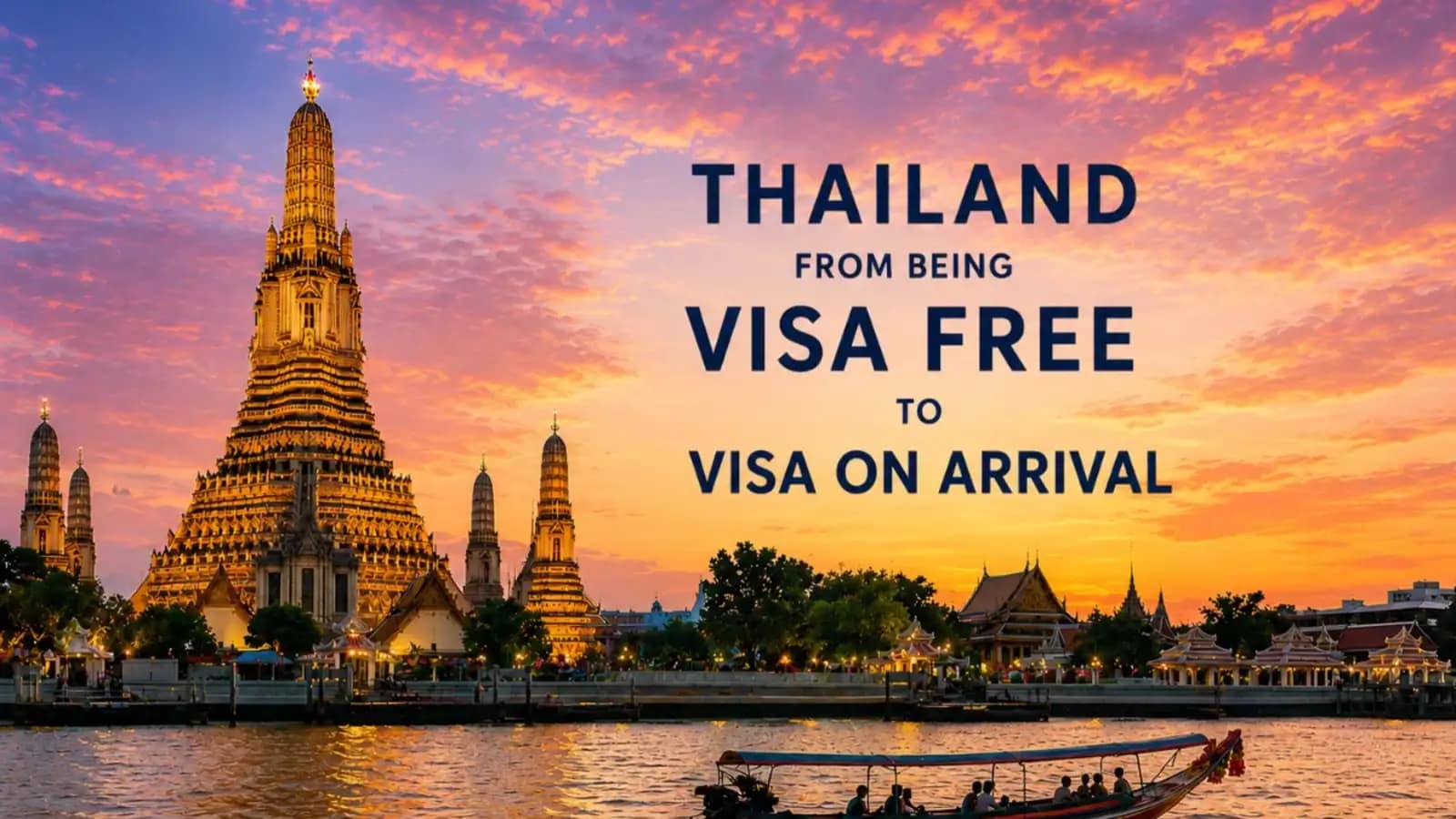
The “Land of Smiles” is changing its entry rules once again. In a major policy shift, the Thai Cabinet has officially approved a proposal to dismantle the 60-day visa-free entry scheme that Indian tourists have been enjoying since mid-2024.
For Indian globetrotters planning their next getaway with Wonder Bharat Holidays, this means a swift return to mandatory border protocols, shorter stays, and updated travel budgets.
If you have a Thailand trip on your horizon, don’t panic! Here is a complete breakdown of why Thailand is ending its free visa for Indians, how it affects your upcoming vacation, the exact cost of the Visa on Arrival (VoA), and how Wonder Bharat Holidays can help you navigate these changes seamlessly.
Why Did Thailand End the 60-Day Visa-Free Scheme?
The Thai government introduced the generous 60-day visa exemption in July 2024 to rapidly revive its tourism-dependent economy after the pandemic. While it successfully brought a massive wave of Indian families, honeymooners, and destination weddings, local authorities also noted severe unintended side effects.
According to official government statements, the reversal comes down to a few major reasons:
- System Overuse & Security Concerns: Thai law enforcement reported a sharp rise in transnational crime networks and illegal businesses run by foreign nationals operating under the tourist radar.
- The “Border Run” Problem: Many visitors were exploiting the long stay to execute quick “border runs” to neighboring countries to reset their clocks and work illegally.
- Focus on “Quality” Tourism: The Ministry of Tourism and Sports indicated that Thailand is shifting its focus away from raw visitor numbers and placing a higher priority on attracting structured, quality tourists while protecting national security.
This change isn’t specific to India; Thailand has scrapped the blanket 60-day waiver for all 93 previously exempt countries—including the UK, US, and neighboring Singapore and Malaysia.
How It Effects Indian Travelers: What’s Changing?
The rollback changes the spontaneity of traveling to Thailand. Here is exactly how the landscape shifts for Indian passport holders under the new framework:
1. The Maximum Stay is Heavily Slashed
Previously, you could stay in Thailand for up to 60 days (and extend it for another 30). Under the revived Visa on Arrival rules, your maximum stay per entry is capped at just 15 days.
2. No More Spontaneous, Zero-Cost Arrivals
You can no longer simply buy a flight ticket, land in Bangkok or Phuket, and walk straight to the immigration counter for a free stamp. You must now join the Visa on Arrival queue, fill out physical paperwork, and pay an entry fee.
3. Squeeze on Long-Stay Travelers & Destination Weddings
Families planning slow, multi-city holidays and couples organizing large destination weddings will feel the time crunch. Any itinerary extending past 2 weeks will require stricter pre-planning and standard tourist visas sourced before departure.
What is the Cost of a Thailand Visa on Arrival (VoA) for Indians?
The free ride is officially over. Indian travelers now have two primary pathways to enter Thailand, each with a specific cost structure:
| Entry Type | Maximum Stay | Visa Fee (approx.) | Best For |
| Visa on Arrival (VoA) | 15 Days | 2,000 THB (Approx. ₹4,500 – Cash only) | Spontaneous trips, short getaways under 2 weeks. |
| Pre-Arrival e-Visa | 60 Days | 2,500 THB (Approx. ₹5,800 via official portals) | Avoiding airport lines, trips longer than 15 days. |
Important Cash Warning: If you choose the Visa on Arrival at the airport, the 2,000 THB fee must be paid in physical Thai Baht cash. Furthermore, random spot checks are common. Immigration requires individual travelers to carry at least 10,000 THB (or 20,000 THB per family) in cash or equivalent foreign currency to prove financial self-sufficiency.
Now What? What to Do Under These New Conditions
If you already have a flight booked or are in the middle of planning your dream Thai vacation, here is your action plan to ensure a hassle-free holiday.
Step 1: Check Your Travel Dates
The new rules take effect exactly 15 days after they are published in Thailand’s Royal Gazette. If your entry date is before the official activation, you will still receive the older visa-free entry. If you enter after, the new rules apply. Luckily, the policy is not retroactive—anyone inside Thailand before the deadline can stay for their stamped duration.
Step 2: Prepare Your Documents Meticulously
To get your Visa on Arrival approved without hiccups, you must present the following at the airport:
- A passport valid for at least 30 days with a blank page.
- A confirmed return or onward flight ticket dated within 15 days of arrival.
- Confirmed hotel bookings covering your entire stay.
- Mandatory TDAC Form: The Thailand Digital Arrival Card must be filled out online within 72 hours prior to departure.
Step 3: Switch to an e-Visa to Skip Airport Lines
If you hate waiting in long immigration queues after a flight, apply for a Thailand e-Visa online 3 to 5 days before boarding. It costs slightly more, but it grants you up to a 60-day stay and allows you to sail past the airport VoA counters.
Book Safely with Wonder Bharat Holidays
Navigating changing international visa policies can be stressful, but it shouldn’t ruin your vacation spirit. At Wonder Bharat Holidays, we track these moving regulations in real-time so you don’t have to.
When you book your Thailand tour package with us, our experts will:
- Handle and verify your mandatory hotel vouchers and return flight documentation to ensure 100% compliance with Thai immigration.
- Assist you in filling out the mandatory Thailand Digital Arrival Card (TDAC) perfectly.
- Provide clear guidance on securing your pre-arrival e-Visa if your holiday extends past 15 days.
Don’t let changing paperwork hold you back from the beaches of Phuket or the street food of Bangkok. Contact Wonder Bharat Holidays today, and let us plan a seamless, worry-free tropical getaway tailored just for you!